How to Switch Property Management Companies in Austin, TX
Austin’s rental market is fast-paced and demanding. Whether you’re dealing with poor communication, rising vacancies, or maintenance delays, you aren't stuck with a subpar partner. Switching property management companies might feel like a logistical nightmare, but in a city where property values are high, settling for mediocre management is a costly mistake.
This guide walks you through how to fire your current firm and onboard a new one without losing a dime or your sanity.
Why Owners Switch Property Managers
Most Austin owners don't leave because of a single event; it’s usually a "death by a thousand cuts." Common triggers include:
Poor Communication: Waiting days for a return call while your property sits empty.
Hidden Fees: Finding "administrative" or "marketing" markups that weren't clearly disclosed.
Maintenance Markup: Paying premium prices for basic repairs without seeing receipts.
High Vacancy Rates: Your property stays on the market for 45+ days while the rest of the neighborhood rents in 14.
When You Can Switch (Contracts & Timing)
The best time to switch is now, but you need to read your Management Agreement first. Look for:
Notice Period: Most Austin contracts require a 30- to 90-day written notice.
Termination Fees: Some companies charge a flat fee or a percentage of remaining management fees to break the contract early.
Renewal Dates: Check if your contract auto-renews. You may have a narrow window to opt out.
Pro Tip: Don't wait until the property is vacant. A professional management company can handle the transition even with a tenant in place.
Step-by-Step Process
- Find Your New Manager First: Never give notice until you have a new management agreement signed. You don't want your property to be "unmanaged" for even a day.
- Review Your Current Contract: Confirm the termination requirements.
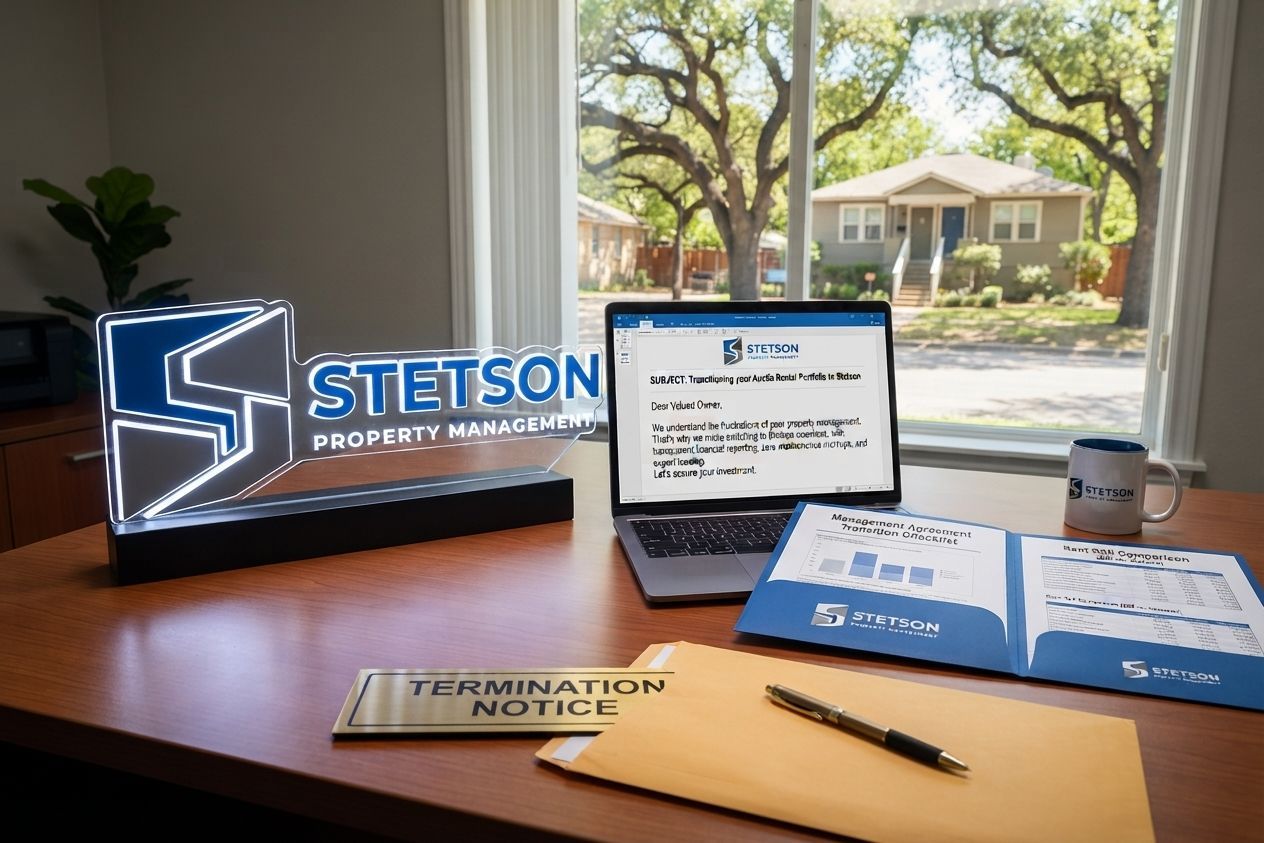
- Send Written Notice: Send a formal, professional termination letter via certified mail and email. You don't need to be confrontational; keep it business-like.
- The Handover: Your new manager will usually handle the "heavy lifting," reaching out to the old company to collect keys, leases, and ledgers.
What Happens to Tenants, Deposits, and Maintenance?
This is the part that keeps owners up at night, but it’s actually quite regulated in Texas.
The Lease: The lease is a binding contract between you (the owner) and the tenant. Changing managers does not change the lease terms.
Security Deposits: By law, the old manager must transfer the security deposits to you or the new manager.
Maintenance: Any open work orders should be closed out or documented so the new team can take over seamlessly.
How to Avoid Disruption
A "quiet" transition is a successful one. To keep your tenants happy (and paying):
Clear Communication: Ensure the new company sends a "Welcome" packet immediately, explaining how to pay rent and submit maintenance requests.
Verify the Ledger: Make sure the new company has an accurate record of what the tenant has paid and what they owe.
Inspect the Property: Have the new manager do a "fresh eyes" inspection within the first 30 days.
Common Mistakes to Avoid
Being the Middleman: Once you hire a new company, let them talk to the old company. They speak the same language and know what documents are missing.
Waiting for a Vacancy: Many owners think they have to wait until the tenant leaves. This is a myth switching during a lease is standard practice.
Not Getting Everything in Writing: Ensure you receive all keys, remotes, and historical maintenance records.
Ready for a Stress-Free Management Experience?
Stop settling for "good enough" in one of the hottest rental markets in the country. Let our team handle the transition for you. We specialize in seamless handovers that protect your ROI and keep your tenants happy.
Find out how much your property should be earning and how easy the switch can be.