Should I Renew My Tenant’s Lease or Find a New Tenant? An Austin Landlord’s Guide
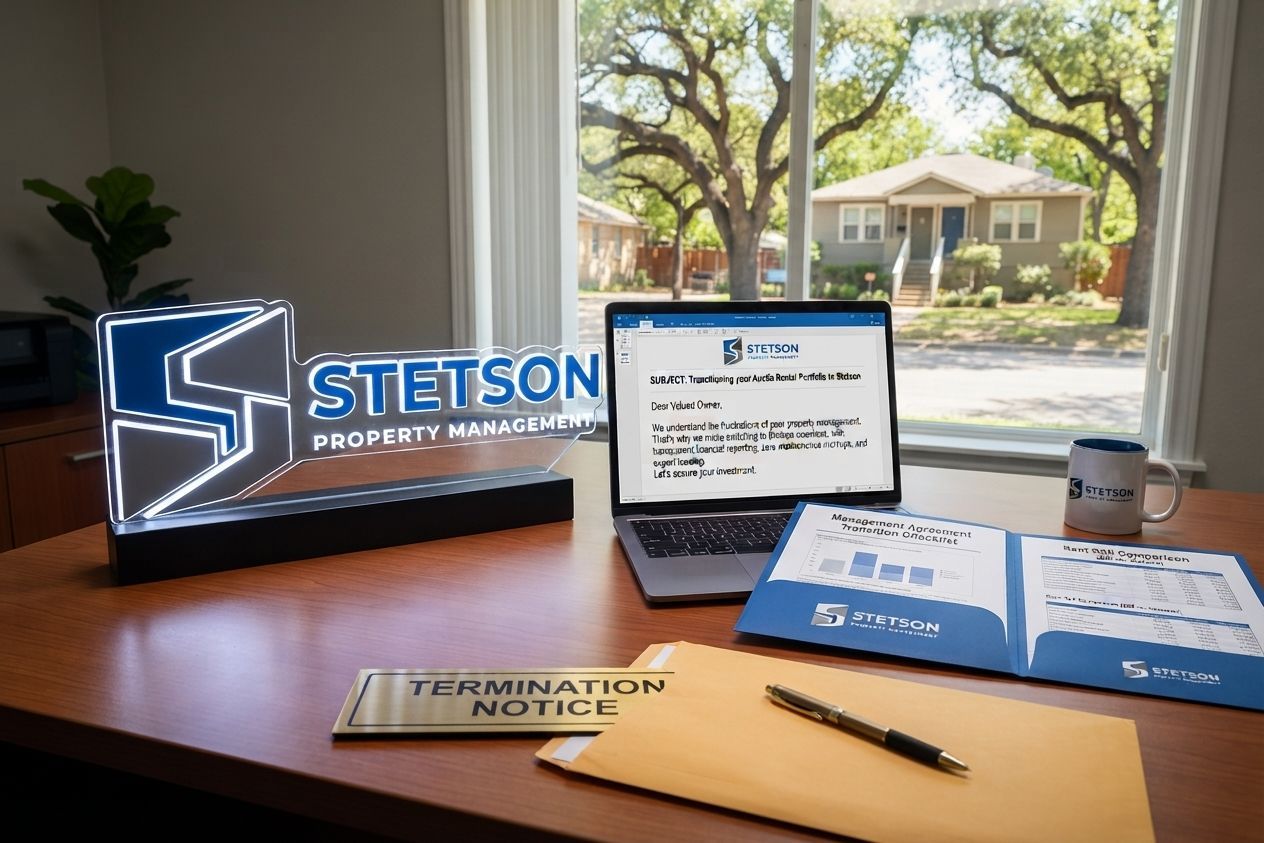
For rental property owners across Austin and Round Rock, an approaching lease expiration creates an important decision: Should you renew a good tenant or try to find a new tenant at a higher rental rate?
It can be tempting to chase an extra $50 or $100 per month. But once vacancy, make-ready expenses, and leasing costs are considered, replacing a good tenant can quickly cost more than the potential rent increase.
At Stetson Property Management, we focus on the owner's net return, not simply achieving the highest possible advertised rent.
The Real Cost of Replacing a Good Tenant
Suppose your current tenant pays $2,000 per month, but you think a new tenant might pay $2,100.
That's potentially another $1,200 per year.
But if the property sits vacant for just one month, you've already lost $2,000 in rent. Add professional cleaning, touch-up painting, landscaping, repairs, utilities, and a new leasing fee, and the additional $100 per month may take years to recover.
Owners should compare these costs before deciding whether replacing a tenant makes financial sense.
You can see exactly how we structure management, leasing, and renewal fees on our
Austin property management pricing page
Vacancy is especially important. We've previously broken down the factors affecting leasing time in our guide,
How Long Does It Take to Rent a House in Austin?
Look at the Actual Austin Rental Market
There isn't one single "Austin rental market."
A single-family rental in Round Rock can behave differently from one in Austin, Pflugerville, Leander, Cedar Park, Georgetown, or Kyle. Even nearby subdivisions can have different levels of rental demand.
Before recommending a renewal rate, we look at:
- Recently leased properties
- Days on market
- Competing inventory
- Property condition
- Current tenant performance
- Time of year
Automated rent estimates can be useful, but they shouldn't make the renewal decision for you.
When Renewing Your Current Tenant Makes Sense
A good tenant has financial value beyond the monthly rent.
At Stetson, we pay particular attention to four things:
Payment History
Does the tenant consistently pay on time? A proven payment history has value compared with starting over with an unknown tenant.
Property Condition
Does the tenant take care of the home, follow the lease, and report legitimate maintenance issues appropriately?
Current Rent vs. Market Rent
Being $50 below market is very different from being $300 below market. A small difference may not justify the financial risk of turnover.
Timing
A vacancy during a strong leasing period may be easier to absorb than losing a good tenant during a slower time of year.
For many owners, keeping a reliable tenant slightly below the maximum possible market rent produces a better long-term return than constantly chasing the highest rent.
When You Should NOT Renew
Tenant retention is important, but not every tenant should receive a renewal.
A non-renewal may make sense when there are:
- Chronic late payments
- Repeated lease violations
- Unauthorized occupants or pets
- Poor property condition or neglect
- Significant problems during the tenancy
- A substantial difference between the current rent and realistic market rent
The goal isn't to keep every tenant. It's to keep the right tenants.
Don't Forget What the Tenant Is Actually Paying
Base rent isn't always the tenant's total housing cost.
Mandatory resident benefit packages, pet rent, administrative fees, technology charges, and other monthly add-ons can make an otherwise reasonable renewal expensive for the tenant.
That can contribute to unnecessary turnover.
We explain this issue in more detail in Tenant Fee Stacking in Austin Property Management
At Stetson, we believe keeping costs straightforward can help owners retain good tenants rather than creating additional reasons for them to move.
Should You Sell the Property Instead?
A lease expiration is also a natural time to ask a bigger question: Should I renew the tenant, find another tenant, or sell the property?
Selling may make sense depending on your investment goals. But today's sales price shouldn't be the only consideration. Rental income, appreciation, mortgage principal reduction, transaction costs, taxes, and the long-term value of holding the property can all affect the decision.
If you're considering selling when your current lease expires, read Should I Sell My Austin Home or Keep It as a Rental?
The Bottom Line for Austin Rental Property Owners
Don't automatically raise the rent because an online estimate says you can, and don't automatically renew every tenant just to avoid vacancy.
Look at the tenant's history, property condition, actual market rent, competing inventory, turnover costs, and timing.
Sometimes raising the rent is the right decision. Sometimes finding a new tenant is necessary. And sometimes keeping an excellent tenant slightly below market is the most profitable decision you can make.
Stetson Property Management handles rental pricing, tenant screening, renewals, maintenance coordination, and day-to-day management for residential rental property owners throughout Austin, Round Rock, and Central Texas.
Learn more about
Stetson Property Management services
Or review our Austin property management pricing and fees